
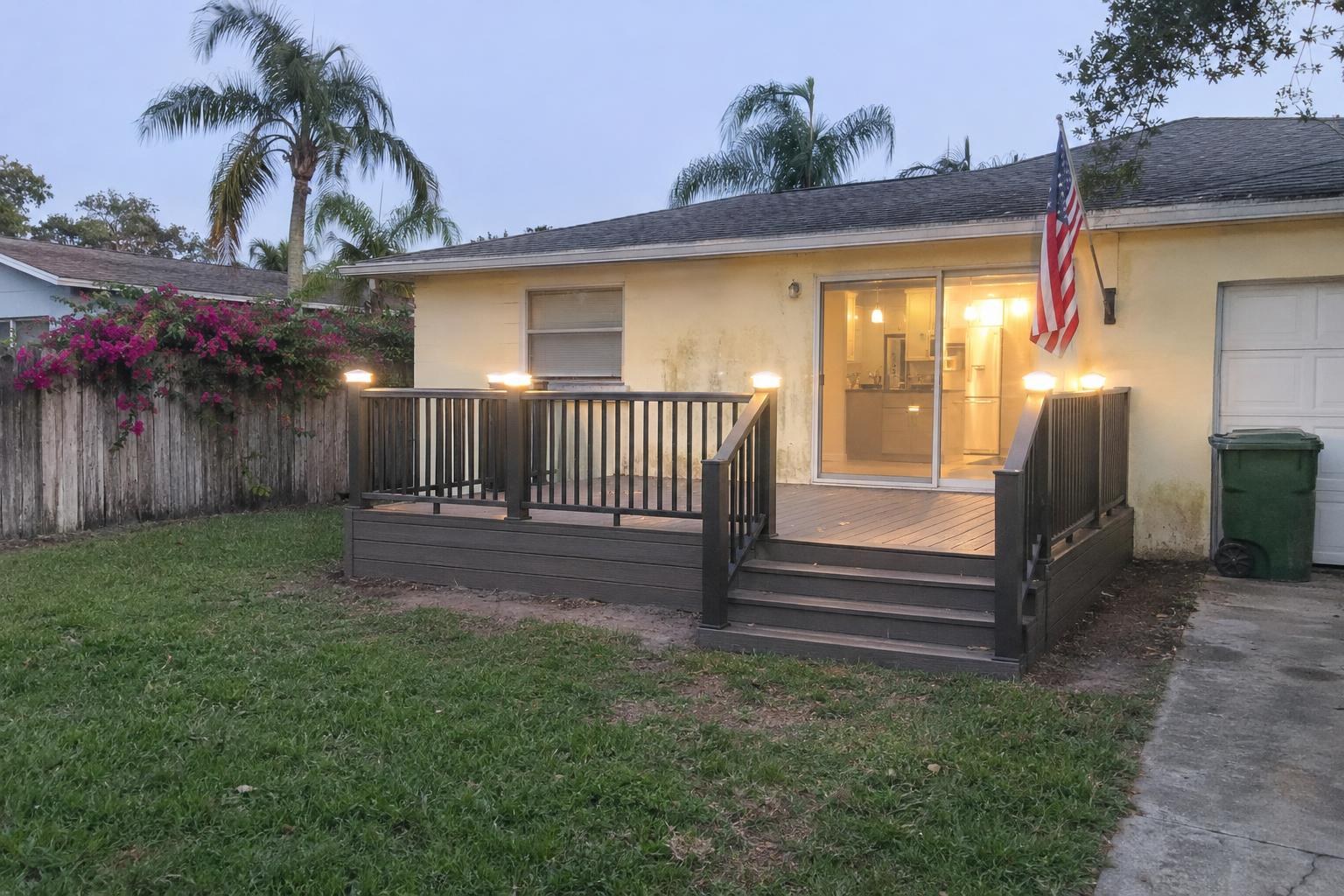
Temple Terrace sits on old citrus grove land along the Hillsborough River, and a lot of lots here have a layer of fill dirt over sandy soil that was never meant to hold up a structure. That matters more than most homeowners think when they're pricing out a deck. A builder who doesn't dig test holes or ask about your lot's history is guessing, not building.
Check the license, not just the business card
In Florida, deck construction is structural work, and it falls under a certified or registered building or residential contractor license, not a handyman registration. Ask for the license number and look it up on the state's licensing portal yourself. It takes two minutes. Ask for proof of general liability insurance and workers' comp coverage too. If a crew gets hurt on your property and the company has no comp policy, that liability can land on you.
A legitimate builder in Hillsborough County will also talk to you about pulling a permit before you talk about stain colors. Most attached decks and anything over 30 inches off grade need one. The county or the city building department will want a footing inspection before concrete goes in, a framing inspection before decking goes down, and a final once railings and stairs are complete. A contractor who tells you permits are optional, or that they'll "handle it under the radar," is telling you he's done this before and gotten away with it. That's not a selling point.
What's actually in the ground here
Sandy soil drains fast, which is good for a footing that needs to stay dry, but it also means posts can settle if the footing doesn't go deep enough or wide enough. Twelve inches down is the usual minimum around here, sometimes more depending on the span and the load. Florida doesn't have a real frost line to worry about, but we do have fire ants, root systems from old citrus trees, and in older Temple Terrace neighborhoods near Riverhills and the golf course, decades of yard fill that nobody has a record of. A builder who hand-digs or augers your footings and actually looks at what comes up, rather than pouring on faith, is doing the part of the job you'll never see again once the decking is on.
Termites are the other local reality. Subterranean termites don't care that your deck is pressure-treated if the ledger board is bolted straight into untreated house framing with no flashing behind it. Water gets behind that ledger during our afternoon thunderstorms, June through September, and it doesn't take long for rot and termites to follow. Ask how they flash the ledger. If the answer is vague, that's a problem spot waiting to happen.
Materials that hold up to Tampa Bay summers
Pressure-treated southern yellow pine is still the most common frame material here, and it's a fine choice if it's rated for ground contact where it needs to be and fastened with stainless or hot-dip galvanized hardware. Standard zinc-coated screws corrode fast in our humidity, and faster still near a pool deck where chlorine splash hits the rail posts. Composite decking has gotten popular for good reason, less maintenance, no splinters, but dark-colored composite boards get genuinely hot underfoot in July sun, sometimes too hot to walk on barefoot by early afternoon. A builder who's installed a lot of it locally should be able to tell you that upfront instead of letting you find out in August.
If you're building a pool deck, ask about expansion joints and how the decking meets the coping. Florida's heat cycles push concrete and wood framing to expand and contract differently, and a deck that's tied in tight with no joint to move in will crack or buckle within a season or two.
Red flags worth walking away from
- A quote with no mention of footing depth, post spacing, or joist size. Those numbers should be on paper, not just in the builder's head.
- A price that's a few thousand dollars below every other bid with no explanation. Usually it's smaller lumber, no permit, or skipped flashing.
- Pressure to sign the same day. A deck is a few weeks of work and years of use. One extra day to think it over changes nothing for the builder unless they're worried you'll compare notes.
- No written start and finish date. Florida's rainy season can push a schedule, but a contractor should still give you a realistic window and update you when weather changes it.
- A builder who won't name a few past jobs you could drive by. Not a glossy portfolio, just an actual address in Temple Terrace or Temple Terrace Heights you can look at.
What a good estimate actually includes
A solid bid breaks out the permit fee separately, states the lumber grade and footing size, and tells you how many inspections the job requires and roughly when. It should also say what happens if an inspector fails the footing or framing pass, because that happens sometimes and a good contractor treats it as a normal part of the process, not an emergency phone call. If the deck sits near an HOA-governed section, like parts of the Golf and Country Club area, ask whether the builder has dealt with that board before. Setback rules and fence-line restrictions vary by neighborhood, and a design that looks fine on paper can get rejected at the HOA level after the county has already approved it.
None of this is complicated once you know to ask. A good deck builder expects these questions and has straight answers for all of them. We walk Temple Terrace homeowners through permits, footing depth, and material choice before a single board gets cut, and you can see the kind of work we do at Brookfield Deck & Patio.